TFAP
Tokyo Forum For Analytic Philosophy
Program
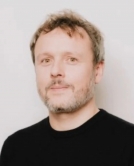
The Game of Philosophy
Speaker: Alexandre Declos
From: Université de Neuchâtel
URL: https://www.unine.ch/philo/alexandre-declos/
Abstract: Is philosophy a game we are playing? This question may seem absurd at first glance. Yet, I shall argue that it is both worth considering and deserves an affirmative answer. I will begin by showing that philosophical practice can be a form of game-playing, by considering scholastic disputes, backward reasoning, and conditional reasoning. I will then offer an argument for the stronger claim that philosophical practice is a form of game-playing in Bernard Suits’ sense (i.e. the voluntary acceptance of unnecessary obstacles). This argument relies on a thought experiment: if we had access to a Super-Computer capable of providing true answers to all philosophical questions, would we use it? I argue that we would not, and that this reveals that we are (counterfactually) willing to accept unnecessary obstacles. If so, philosophical practice is a game: our goal is not merely to discover philosophical truths, but to reach them through our own intellectual efforts. I shall conclude by arguing that the lusory model does not diminish the value of philosophy.
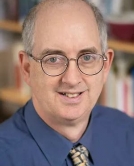
TBA
Speaker: Alan Baker
From: Swarthmore College
URL: https://www.swarthmore.edu/profile/alan-baker
Abstract: TBA
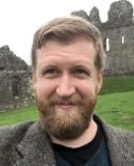
TBA
Speaker: Chris Letheby
From: University of Western Australia
URL: https://research-repository.uwa.edu.au/en/persons/chris-letheby/
Abstract: TBA
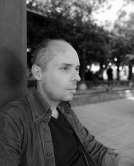
Bayesian Confirmation Without the Problems of Old Evidence and Circularity
Speaker: Frank Zenker
From: Nankai University
URL: https://phil.nankai.edu.cn/enn/2023/0301/c29847a505408/page.htm
Abstract: Bayesian Confirmation Theory faces two core challenges: the Problem of Old
Evidence, where known data fails to incrementally confirm a hypothesis, and the Circularity
Problem, where defining confirmation via posterior probabilities presupposes the very belief
state being evaluated. This paper dissolves both problems by defining confirmation through the
Likelihood Ratio, grounded in an agent’s hypothetical prior probability distribution—their
evidence-independent reasoning commitments. Because contingent evidence has a probability
between 0 and 1 in this prior distribution, the old evidence retains its actualized confirmational
power without counterfactual assumptions. Furthermore, because LR relies exclusively on
likelihoods, it avoids circularity by operating independently of posterior probabilities or initial
priors. Beyond resolving historical paradoxes, this framework provides a principled criterion for
scientific pursuitworthiness, allowing researchers to assess an experiment's potential epistemic
value prior to gathering data.
TBA
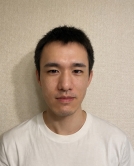
Speaker: Tomoya Kubota
From: University of Tokyo
URL: https://researchmap.jp/kubotatomoya?lang=en
Abstract: TBA
TBA
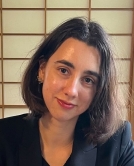
Speaker: Diana Craciun
From: University College London & Human Abilities Center, Berlin
URL: https://www.dianacraciun.co.uk
Abstract: TBA
TBA
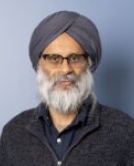
Speaker: Gurpreet Rattan
From: University of Toronto
URL: https://discover.research.utoronto.ca/5751-gurpreet-rattan/about
Abstract: TBA
TBA
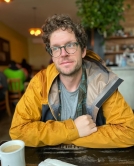
Speaker: Sam Clarke
From: University of Southern California
URL: https://sampclarke.net/
Abstract: TBA